



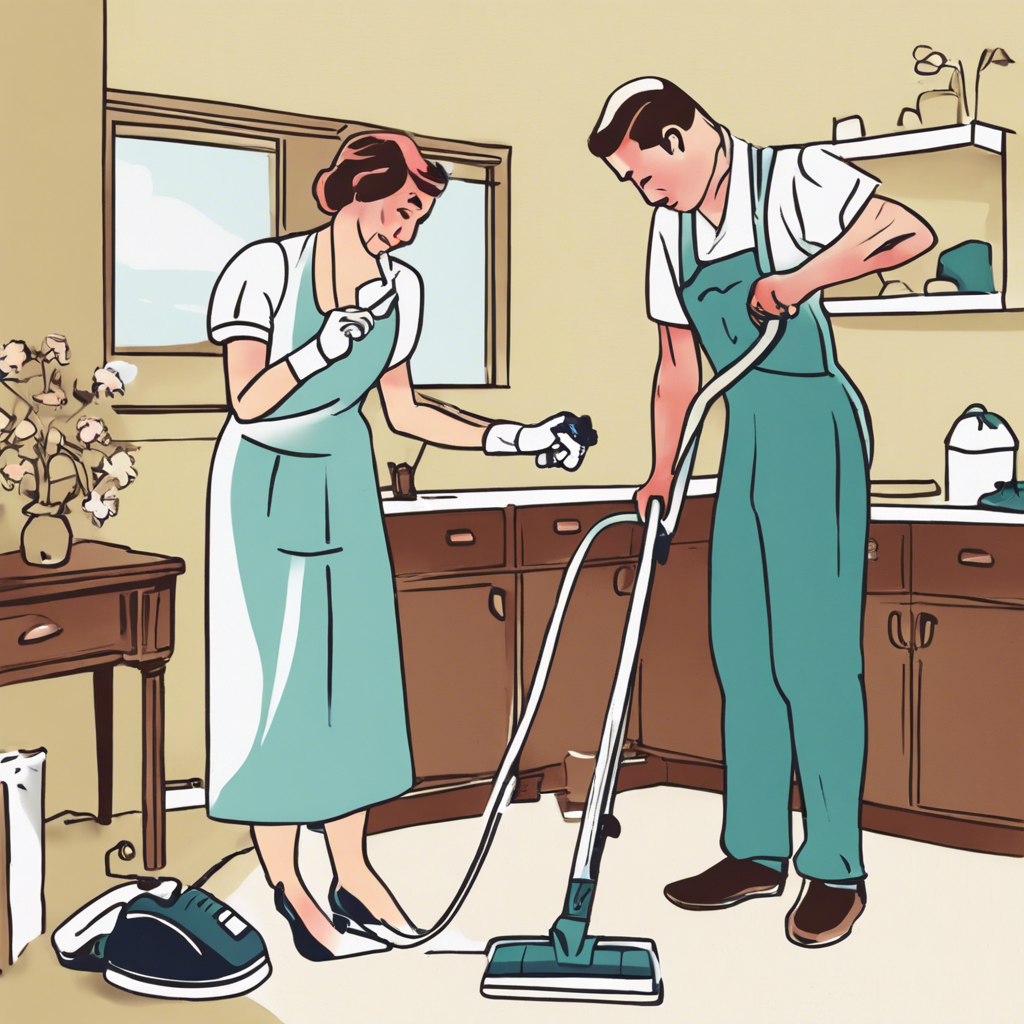
 Pay people proper wages – with pensions and vacation pay – for working at home, taking care of the house, and providing care for children and elderly parents. Then many would undoubtedly choose to stay home and do this important work, which is so incredibly valuable to society – not least according to those who are eager to “get women back to the kitchen.”
By Elin Brimheim Heinesen
Why should people, who could use their talents for so many other things, do this essential work at home for free and be forced to live at the mercy of their partner? How dignified is that? How secure is that? No, if people truly believe that the work done by those staying at home is as valuable as they claim, then ensure that those staying at home receive proper wage compensation! Perhaps some men might even consider staying at home if they received a proper salary and weren’t ridiculed for it, right?
I wrote this on Facebook recently. One of the responses went like this:
“For me, it seems like the woman has to earn money because the man does. Therefore, she must be paid for staying at home or choose not to stay at home to earn money. It sounds like it boils down to both parties needing to earn money. That’s where I step off a bit. If you’re a team, it doesn’t matter who earns the money because it’s our money, not mine or yours.”
What is the “right” division of labor in a relationship?
It sounds great in theory that a couple should be a “team” that shares tasks – and money. I also believe that, ideally, a couple should be/do that, but not in the way many (mostly men) clearly see it, where the man works outside and earns the money while the woman works at home. So wonderfully balanced, right?
But if you’re one of those who think this is the “right” way… don’t you see the risk of one partner being financially dependent on the other? Don’t you see how unfair it is to the partner who has to put all their trust in the one earning the money not suddenly leaving the relationship?
I assume you’re aware that the one earning the money also has the greatest advantages because they are the one with the most financial security of the two, right? For example, they have much better opportunities to leave the relationship if things don’t go their way because they are financially independent of the other partner.
The partner who gave up their salary, pension, and career to dedicate all their time to unpaid work at home for the benefit of both doesn’t have that luxury. If the breadwinner decides to leave, the other is often left with little to nothing.
Would men want to be financially dependent on their wives?
Sure, they can perhaps split assets in half, but the partner who hasn’t built up as much seniority and experience in the labor market has no chance of re-entering the workforce – after maybe 10-15 years at home without paid work – to earn as much, and likely not enough to maintain the same standard of living, home, etc. They also haven’t earned as much toward their pension as the other partner and are therefore often the one who has to give up much more than the other if they divorce.
In a team, the partners are supposed to be in solidarity with each other in all matters, but how is it fair to expect only one partner to give up almost all their financial security – far more than the other partner has to?
How many men, do you think, would voluntarily put themselves in such a financially insecure position? It’s easy to expect it of the other partner when you don’t have to face that situation yourself and don’t expect the same of yourself.
So much for the nice idea of being a “team.” Maybe the idea wasn’t so nice after all…
How do we ensure financial security for women and children?
One thing is the relationship between the man and the woman – that they don’t ensure enough security for the woman in the internal agreements they make, as it’s so nicely put. Another thing is that a mother today also has to ensure that the children have a good home if and when the parents divorce – as nearly half of couples do today, so this is the plain reality.
A mother who doesn’t secure herself also doesn’t secure her children in the event of a divorce. And betting on the man giving up everything so the children can keep their home with the mother doesn’t always work out. So, how do we ensure the women and the children with them are secure? That’s the question. The women before us asked us to make sure we earn our own money because they wanted the best for their children.
Our grandmothers and mothers learned the hard way that this wasn’t a desirable situation for any woman, especially as retirement age approached. That’s why many of us in our generation and slightly younger were raised with warnings not to end up in the same situation as them but to ensure we earn our own money and are financially independent.
Romanticizing life as a homemaker
But unfortunately, history is often forgotten. Now we have a new generation of young women who see the struggles their mothers and grandmothers faced in balancing work life and home life, and they don’t want to repeat it. That’s understandable. But is the solution to become a homemaker?
In many – perhaps most? – cases, the reason for women’s difficult situation is that men didn’t keep up. They still don’t participate enough in the work at home to ease the burden on working women. The vast majority of responsibility for the home and care for children and the elderly still falls on women.
So now young women are starting to think it’s probably best to stay at home so they have time to take care of everything there, instead of expecting men to take the same responsibility as they do on the home front if both are working outside to earn money.
I hope they don’t – like our mothers and grandmothers – one day, when the relationship perhaps no longer holds, and they are too old to save enough for retirement, wake up to a harsh reality. I hope for their sake that the day never comes when poverty hits them, and they ask themselves: Why on earth did I put myself in such a vulnerable position? Look at what I got in return for sacrificing myself for my husband, children, and home…
Lack of solidarity from men
It seems history is repeating itself, so young women again have to learn the hard way – just like their grandmothers and great-grandmothers – before they understand how important it is to earn their own money and be financially independent of their husbands.
In the next cycle, I hope men will be more in solidarity with women than they have been so far because solidarity between the genders is a prerequisite for equality. Men largely hold the key to women truly being able to realize their full potential, just as they themselves have had the privilege to do so far because they had women to take care of everything at home, which would otherwise have gotten in the way of their development and self-fulfillment.
I don’t expect it will be easy to get men on board to do all the work, many of them consider to be women’s work. Many men would probably – in fear of not appearing masculine enough – rather do everything they can to let robots take over all the necessary care work in society than participate in it themselves. Women likely won’t have the conscience to leave care work to robots. So they don’t really get anywhere and are stuck in a situation where they often have to work outside, as society is structured now, while also taking care of most of the daily work at home. Unfortunately, that’s how the situation looks at the moment.



