
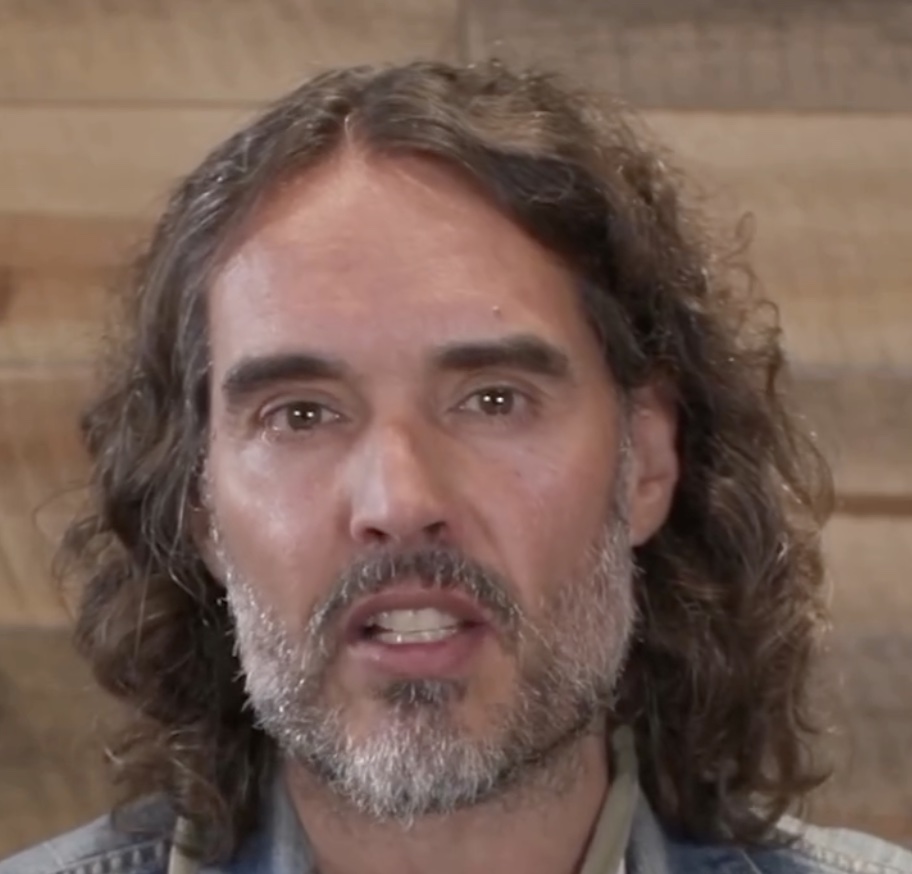
Russel Brand
Dear Russell,
Let me say straight away that I am not one to mock your newfound passion. If your love for the Christian faith is genuine, and you truly have a desire to become a better person than you have been, then this is certainly not the worst path for you to take.
You have said that reading the Bible became the key to your conversion. It is true that the Bible contains a great deal of wisdom that we as human beings can learn much from. But let us not forget that the Bible can be interpreted in countless different ways, depending on who is reading it. Throughout history, this has sparked countless disputes and divisions, for what people take from the Bible is so highly individual — each person emphasizes different passages and takes different parts literally, often depending on which sections resonate most with them personally.
The question is whether we should read the Bible literally as a divine voice speaking to us, as many evangelical congregations prescribe that it should be read. Or whether we should also bear in mind that the Bible is a mirror image of its very human — and therefore flawed and fallible — authors who wrote it. For the Bible is full of contradictions and morally questionable, not always particularly loving claims attributed to Our Lord — our Heavenly Father, who Christians otherwise believe loves us all — but which in reality are most likely ideas of a far more earthly origin.
When all is said and done, the Bible was written by people who — as people always have — struggled with very difficult living conditions, and who therefore had a great need to find meaning in a complex world — not least to find meaning in their own complex character. It is therefore only natural that many people recognize themselves in the stories of the Bible, where many of them — although the stories aren’t always in agreement with each other — give us very wise insights into the human soul. And so it is perhaps not so strange that people become convinced that such profound wisdom must be inspired by an omniscient God. Whether that is the case, I will leave unanswered. It is up to each individual to believe or not.
This leads to some pressing questions: What makes a man like you embrace the Christian faith and the Bible? And how honest and genuine is your faith? In any case, it is an interesting phenomenon that Christianity attracts you, especially when one thinks about your past. For a person like you, with a past as a substance abuser and an accused sexual offender, faith can of course offer something that secular society rarely can: namely the promise of a completely new identity.
This promise can be used in two very different ways, and the intensity of the faith cannot in itself reveal which of the two it is. Faith can truly be an incentive to confess one’s sins, to repent and learn from the wrong one has done. But faith can also be a shortcut and a self-flattering illusion that now you are saved, enlightened and absolved of sin, all while exactly the same self-serving patterns of behavior continue behind the scenes. So if you are to be completely honest: Does this conversion really make you a better person? This is not a question your feelings can answer. Only your behavior over several years can answer the question.
But why sow doubt about this “cure” you have just found? You have often spoken about the time when you were enslaved by drugs and by sex. Have you considered whether one of the reasons for your conversion might be that the religious fervor, which is particularly visible within the evangelical congregations you have chosen to become part of, feels like a euphoric high reminiscent of the high you got from the sexual gratification and the drugs you were once so drawn to?
You have no doubt heard the old saying: “Once an addict, always an addict.” It seems particularly fitting here, as you find yourself walking a path trodden by many “born-again” individuals before you, who profess to have overcome addiction, only to substitute one potent dependency for another. It is a well-known phenomenon that some who seek salvation — especially from themselves — often seem drawn to the message of the evangelical faith, lured by the promise of being absolved of all sin, while what in reality happens is that they are drawn to the blessed high that religious fervor gives them.
You are a man of no small intelligence, and it must have crossed your mind that the evangelical faith can in fact feel just like an intoxicating high, especially for people with a tendency toward narcissism and a grandiose self-image. A tendency you have professed to have yourself. This applies not least if you like to have others see you as a selfless person who helps others to “wake up” and free themselves from the evil forces of the world. This has, after all, been at the core of your many shifting podcasts over the past many years.
Not that you have always been wrong — far from it. You have been right about much of what you have put forward. But what is your main motive for doing what you do? Is your main motive that you really want to help others? Or is it mostly because it is like a seductive drug for you to gain as many followers as possible who clap their hands at everything you say? Could it be a new addiction to the intoxicating feeling you probably get from becoming a highly respected man in the congregation among your fellow believers, who honor you for your ‘selflessness’, while in reality you continue to be just as manipulative to others as you have always been, like any other ordinary narcissist?
Religion can give a narcissist an excellent opportunity to present an attractive facade — a good camouflage that effectively hides his narcissistic grandiosity, superiority and self-righteousness, and makes him appear as if he is humble before God, while in reality he just loves the opportunity to feel better and more righteous than others, because he himself has now been saved. The “others” have not.
For example, the allure of being “right”, for instance, can be intoxicating, right? To believe that you hold the key to truth, while those who choose doubt wander in darkness, that must at least grant a certain sense of elevation, mustn’t it? In reality, this arrogant mindset fosters fanaticism, as it leaves no space for doubt. Yet, you are as already stated not stupid, so might you, deep down, grapple with the realisation that it all may just be a fragile construct—sweetly delusional, indeed? So with all this in mind… can you still say that you have really become a better person?
If things go for you as they do for many other converted addicts, it is unlikely. Conversion no doubt makes many turn completely away from the life they lived before. Perhaps also you. At least that is how it looks. But does conversion and “salvation” always bring a real, fundamental change for everyone? It is very difficult to run away from oneself. Many who give themselves over to the evangelical faith and say that “God has saved them from sin” still often turn out to have just the same patterns of behavior as they had before they were “saved,” where they continue first and foremost to serve themselves and their own interests, often without really showing the Christ-like behavior they so eagerly pretend to represent. Quite the opposite.
Think, for example, of the many high-ranking priests and other highly respected congregational leaders who time and again are exposed as having given in to their lowest desires, and who, intoxicated by their position of power, have committed the most disgraceful acts, which they have hidden like murder — perhaps over many years, while leading their trusting congregations. Misdeeds that eventually come to light somehow, even though many have protected them all along so as not to damage the reputation of the congregation. The stories of sexual abuse, pedophilia, hypocrisy, assault, disgrace and more among preachers and priests are frighteningly common. Their repeated rambling, admonishing and aggressive cries about hell, salvation and conversion often in such cases turn out only to have been signs that much deeper psychological problems lay behind. Their doomsday sermons were only used to hide the beast lurking in their own subconscious, which they in no way wanted to acknowledge and admit they had in them, and therefore projected onto others.
Research unfortunately shows that narcissists and psychopaths thrive in many Christian congregations, where they abuse their power and take advantage of innocent and trusting members. Examples like these must make people ask far more critical questions of those who present themselves as missionaries and take on the role as guardians of morality for others. Are their errands really always selflessly just to save others? Or do they take on this elevated role first and foremost to gain power over others and to save themselves — i.e., in order to control others and the congregation’s narrative, making sure they are not exposed as the shameful sinners they really are? Is their attractive facade just a garment they hang up in front of pride, vanity and sinful behavior behind it? Do they really embody the virtues they preach about?
One warning sign in any case is when people demonize those they disagree with. When one so eagerly points to the faults of others, one in reality only unconsciously casts one’s own shadow onto others. The reality is that the difference between people is not that great at all. Moral superiority fosters an “us versus them” mentality that drives a wedge between people — between believers and non-believers, between different faith groups, between different generations, etc. — and can fuel great fear of one another, alienation and hostility, which in the worst case can lead to serious collective paranoia. In history we have unfortunately seen far too many examples of how this can develop into justification for harsh treatment of those one sees as one’s opponents. To paint images of enemies and to instill fear in people sows the first seed of many disagreements and conflicts — and can in the end even lead to world war. So here one must tread carefully.
I don’t know whether you, as a newly “converted Christian,” may feel inclined to sweep these observations aside and reject them as representing the evil you’re trying to escape — as if this ‘evil’ is attempting to lure you away from your faith. That I cannot know, but I think I understand if you want to hold on and do not want to be led away from the faith. It is in no way my intention to do that with these observations. On the contrary.
I just hope that when the initial euphoria over your conversion starts to fade, you will not be left standing there with a painful realization of how deeply you have fallen down the rabbit hole. Will you wake up to the realization that what you thought was your salvation is perhaps just another form of addiction — an addiction to cultivating an unruly narcissism, but this time hidden behind a beautiful facade? If your conversion is real, then it is not about hiding behind: “God has forgiven me, so you must too.” No, a true conversion would look like this:
You state clearly what you have done, without embellishing it — you do not say “I fell into sexual sin” or “I made mistakes” — and you do not blame the victims, the circumstances or the devil. You acknowledge your secular responsibility, not just the spiritual: you accept the legal consequences where you have broken the law, you accept help from professional specialists, e.g. in therapy for people who commit sexual assault — and not just pastoral counselling with priests or pastors — and you set firm, lifelong boundaries for your behavior around people who are more vulnerable than you. You do not rush to congregations or onto other platforms to bear testimony, to congregational leadership or moral authority. You accept others’ suspicion and accept guidance. You pressure no one to forgive you, to meet with you or to reconcile with you. Your compassion is first and foremost with those you have harmed — not with yourself and how much suffering you have endured, or how much you have lost.
But in the case where faith is only delusion, you on the contrary rush up onto the stage. You use forgiveness as a shield to silence critical voices and seek to have others honor you for how “good” you have now become — in other words: you cultivate “virtue-signalling” — and create an “us versus them” world where those who criticize you are out in the darkness, while you are in the light. That is not truly repenting one’s sins.
For your own sake, let us hope that you see clearly which path you are leaning toward. There is still time to take a few steps back, away from the edge of the abyss that pride, vanity and self-righteousness is. Instead of using your energy only to intoxicate yourself in your own conversion, boasting and signalling how “good” you are, rather find the possibilities within yourself to become a true driving force for good, which does not draw all attention to your own person, but rather casts the light upon those you say you want to do good for and help. A person who has truly become a better person gladly welcomes criticism and uses his energy selflessly to look inward and learn from his mistakes. Such a person proves both in private and in public, over several years, that he is capable of changing behavior, which can then be witnessed and confirmed by independent people who have no reason to protect or shield this person.
Sincerely,
One who hopes that your capacity to grow as a human being will overcome your capacity to deceive yourself.